
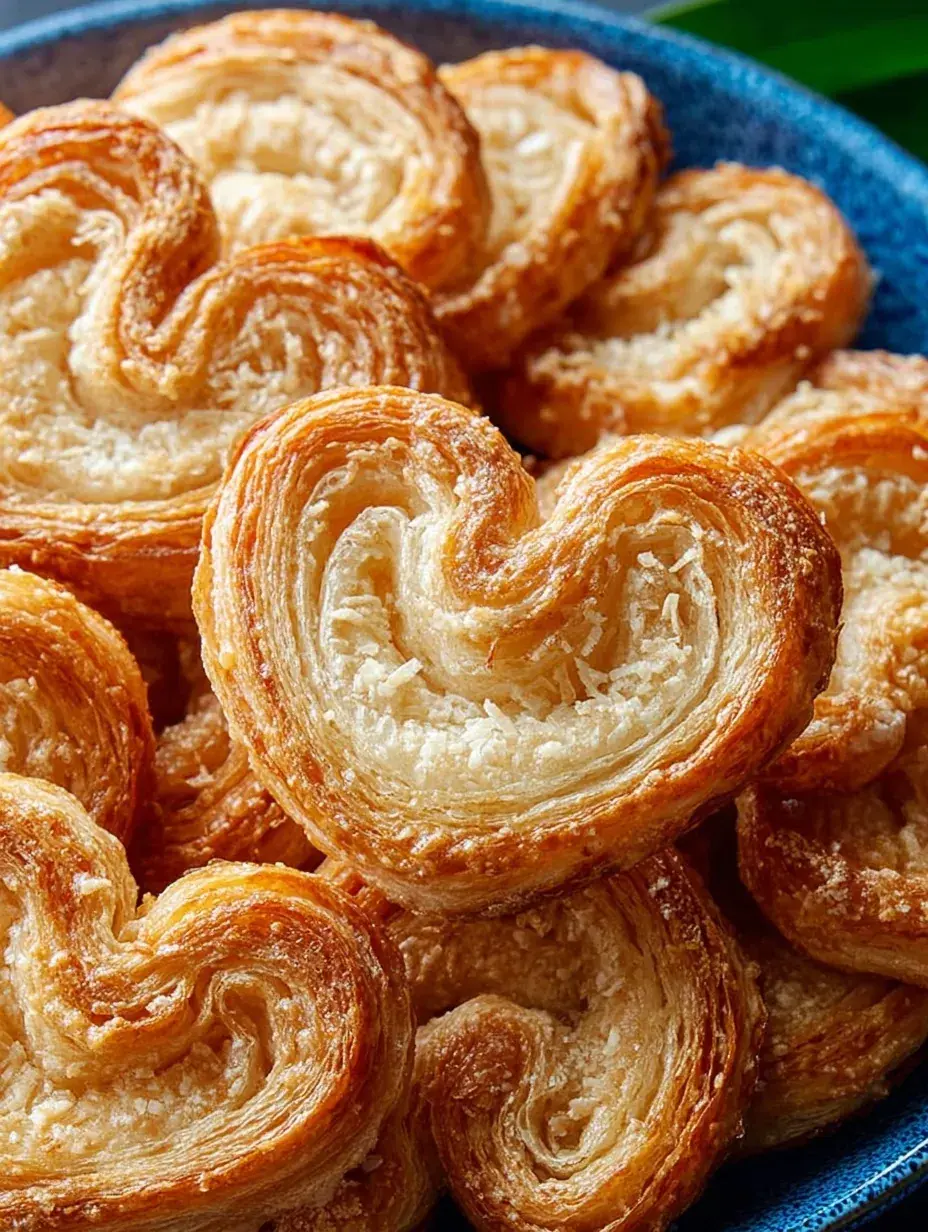
I honestly forgot the first batch of these in the oven because I was busy helping my daughter with a messy glitter glue project. The kitchen smelled like burnt sugar, but the second batch turned out so golden and buttery that we ate half the tray before they even reached the cooling rack.
Why You Will Love This Palmiers Cookies
I remember the first time I tried making these, I was convinced I would need a French pastry degree to get those perfect layers. It was a cold November morning, and I just wanted a quick treat to go with my coffee while my daughter was napping.
I was so surprised to find that the simple magic of folding dough and sugar could create something so elegant. After testing this recipe several times, I realized that the secret is all in the temperature of the pastry rather than any complicated technique.
What Makes This Palmiers Cookies Special
The texture is what really sets these apart from any other treat in my kitchen. Each bite is a mix of shatteringly crisp pastry and sweet, melty caramel.
They are surprisingly simple to put together even if you are not a confident baker. All you really need is a rolling pin and a little bit of patience while folding the dough.
These are the ultimate holiday shortcut for when you want a dessert that looks like it came from a fancy bakery. I often bring a plate of these as neighbor gifts because they travel so well and do not crumble easily.
The Best Palmiers Cookies Recipe
I love making these on Sunday afternoons when the house is quiet and we want something sweet but light to go with a cup of tea. It is one of those recipes that makes the whole house smell like a professional patisserie.
Ingredient Notes
- Puff Pastry: This provides the hundreds of flaky layers. Make sure it is thawed but still very cold to the touch so the butter does not melt before it hits the oven.
- Granulated Sugar: The sugar acts as the glue and the coating. It melts into a beautiful golden caramel that gives the cookies their signature crunch.
- Sea Salt: A tiny pinch of salt cuts through the sweetness. I personally prefer fine sea salt because it dissolves evenly into the sugar mixture.
- Ground Cinnamon: This is optional but adds a lovely warmth. My daughter always asks for extra cinnamon because it reminds her of snickerdoodles.
- Butter: While not an added ingredient, the high butter content in the pastry sheet is what creates the steam for those airy layers.
Instructions
- Preheat and Prep. Set your oven to 400 degrees and line your pans with parchment paper. Mixing the sugar and salt in a small bowl first ensures every bite has that perfect balance.
- Prepare the Surface. Sprinkle a generous layer of sugar on your counter before laying out the pastry. This ensures the bottom of the dough is fully coated as you roll it out.
- Roll and Press. Use your rolling pin to press the remaining sugar into the top of the dough. You want the rectangle to be about 10 by 12 inches with sugar visibly embedded in the surface.
- Fold Inward. Fold the long sides toward the center until they meet halfway. Then fold them again so they meet in the middle, creating a narrow strip that looks like a long, flat scroll.
- Slice the Dough. Cut the strip into half-inch pieces using a sharp knife. They will look like little hearts or butterfly wings once you place them cut-side up on the baking sheet.
- Bake and Flip. Bake until the bottoms are deeply caramelized and brown. Flip them over carefully for the last few minutes to ensure both sides are crispy and golden.
Billy’s Tips and Mistakes to Avoid
- Keep the dough cold because if the pastry gets too warm, the layers will stick together and won’t puff up. I often put the sliced cookies in the fridge for ten minutes before baking if the kitchen is hot.
- Do not be afraid of the dark golden color. The sugar needs to reach a true caramel stage to get that iconic crunch, so do not pull them out too early.
- Watch the oven closely during the last five minutes. Sugar goes from perfectly caramelized to burnt very quickly, as I learned the hard way with my first batch.
- Leave plenty of space between the cookies on the tray. They expand quite a bit as they puff out, and they will stick together if they are too close.
- Use a sharp knife or even a bench scraper to slice the dough. A dull knife will squish the layers together and ruin the beautiful swirl pattern.
Storage Tips
These Palmiers Cookies are best eaten the day they are made when the crunch is at its peak. You can store them in an airtight container at room temperature for up to 4 days, but they might lose a little crispness if the air is humid. I do not recommend freezing the baked cookies, but you can freeze the unbaked sliced dough for up to 2 months.
Variations and Swaps
- Swap the cinnamon for cardamom or pumpkin pie spice for a different seasonal flavor profile.
- Dip half of the cooled cookie into melted dark chocolate for an extra indulgent treat.
- For a savory version, swap the sugar for grated parmesan cheese and dried herbs like rosemary or thyme.
Why This Recipe Works Every Time
The simplicity of this recipe is why it is so reliable for busy families. By using store-bought puff pastry, you are guaranteed those hundreds of flaky layers without the hours of labor usually required for French baking.
On my second batch, I discovered that flipping the cookies halfway through is the absolute key to a professional finish. It allows the sugar on both sides to caramelize evenly, creating a glass-like coating that stays crispy for hours.
Ingredients
- 1 sheet puff pastry (approximately 250g), thawed but cold
- 1/2 cup granulated sugar
- 1/4 teaspoon fine sea salt
- 1/2 teaspoon ground cinnamon (optional)
Instructions
- Preheat oven to 400 degrees Fahrenheit (200 degrees Celsius) and line two baking sheets with parchment paper.
- Combine the granulated sugar and salt in a small bowl.
- Sprinkle approximately 1/4 cup of the sugar mixture onto a flat work surface.
- Unfold the cold puff pastry sheet and place it on top of the sugar.
- Sprinkle the remaining sugar mixture evenly over the top of the pastry sheet.
- Use a rolling pin to lightly press the sugar into the dough, rolling it into a 10x12 inch rectangle.
- Fold the two long sides of the rectangle inward so they meet halfway to the center.
- Fold the sides inward again so they meet exactly in the center.
- Fold one half over the other as if closing a book, creating a narrow 6-layer strip.
- Slice the strip crosswise into 1/2-inch thick cookies.
- Place cookies on the prepared baking sheets, cut-side up, leaving 2 inches of space between them.
- Bake for 10 to 12 minutes until the bottoms are caramelized and golden brown.
- Flip each cookie over and bake for an additional 3 to 5 minutes until the other side is golden.
- Transfer immediately to a wire rack to cool and harden.
Frequently Asked Questions
Why did my Palmiers Cookies turn out soft instead of crispy?
This usually happens if they were not baked long enough for the sugar to fully caramelize. Make sure they are a deep golden brown on both sides before removing them from the oven.
Can I use homemade puff pastry for this recipe?
You certainly can, and it will taste wonderful! However, high-quality store-bought pastry works perfectly and saves a lot of time on a busy afternoon.
How do I prevent the sugar from burning on the baking sheet?
Using parchment paper is essential to prevent sticking and burning. Also, make sure to transfer the cookies to a wire rack immediately after baking so they do not continue to cook on the hot tray.
The Bottom Line
Whether you are serving these at a holiday party or just enjoying one with your morning coffee, these Palmiers Cookies always feel like a special occasion. They prove that you do not need a long list of ingredients to make something truly memorable. Sweet moments don’t have to be complicated. Let’s make something wonderful together.
I hope these little sugar hearts bring a bit of French bakery magic to your kitchen this week. Happy baking! Billy
Billy